Single Incision Laparoscopic Surgery (SILS)
Mangalore's first SILS procedure was performed here in 2010. For suitable abdominal conditions, surgery is completed through one small access point concealed around the umbilicus.
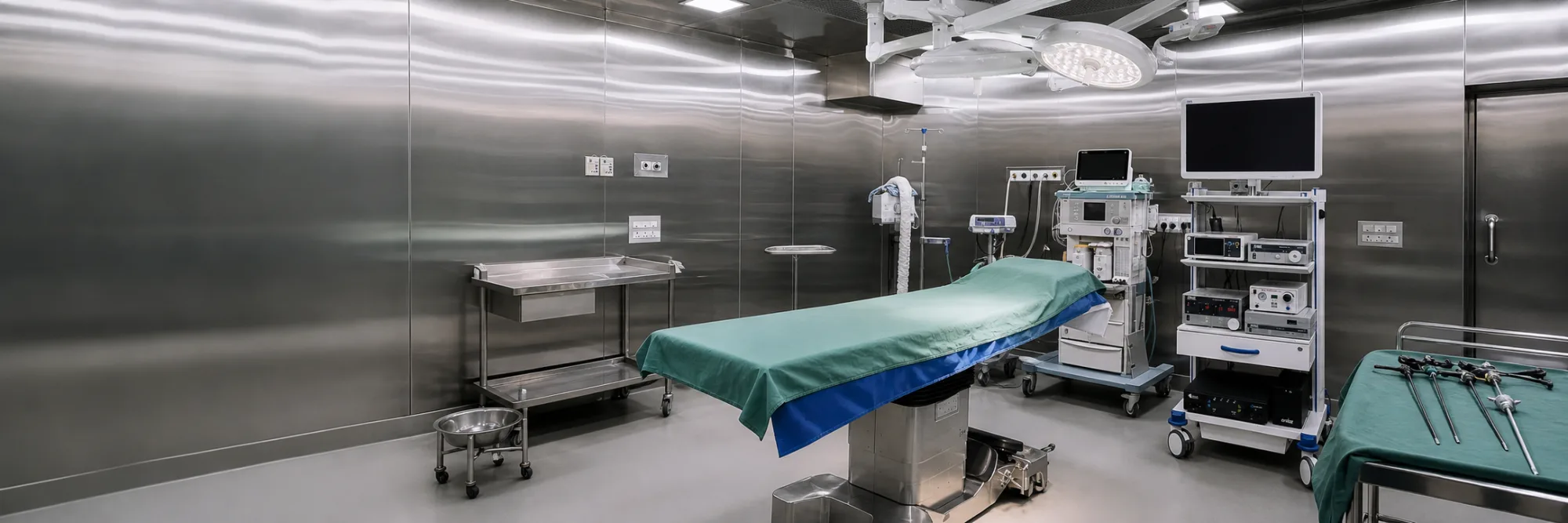
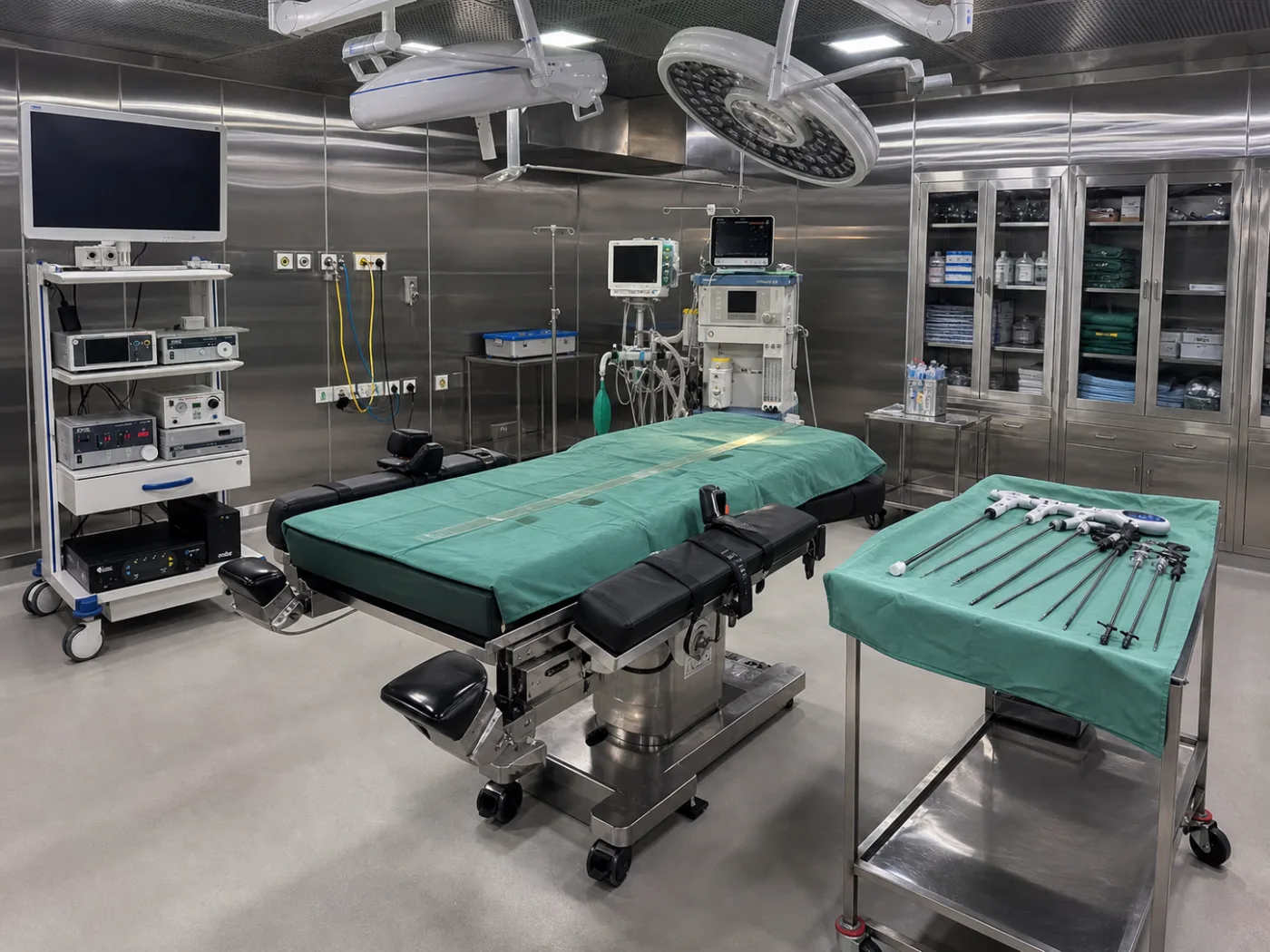
Laparoscopic — or "key-hole" — surgery uses a handful of small incisions, a high-definition camera and long, specialised instruments to perform operations that once required a large open cut. Mangala Hospital established the Mangala Institute of Laparoscopic Surgery (MILS) as the region's dedicated centre for minimal-access technique, and hospital records describe it as the only centre in Mangalore built specifically around laparoscopic surgery.
The unit is led by Dr. Keshav Prasad Y.V., Chief Laparoscopic Surgeon at Mangala Hospital and Associate Professor of Surgery at KMC Mangalore, who performed Mangalore's first Single Incision Laparoscopic Surgery (SILS) in July 2010 — removing a diseased gallbladder containing a 1.8cm stone through a single 2cm incision around the umbilicus. The department is equipped with a three-chip high-resolution camera system, vessel-sealing devices and ultrasonic dissectors, giving the surgical team the tools for both routine and advanced minimal-access procedures.
Compared with open surgery, laparoscopic technique typically means less post-operative pain, a shorter hospital stay, smaller scars and a faster return to normal activity — while also offering better visualisation of deep structures such as the hiatus and pelvis. Beyond routine gallbladder and hernia surgery, the department manages advanced procedures including bariatric (weight-loss) surgery and gynaecological laparoscopy.
MILS is Mangala Hospital's dedicated minimal-access surgery unit, home to Mangalore's first Single Incision Laparoscopic Surgery in July 2010.
Meet Dr. Keshav Prasad Y.V. →Our Casualty & Emergency department is open 24x7, with mobile ICU ambulance backup.
Call: 0824 244 3088Per hospital records, the only centre in Mangalore built specifically around minimal-access surgical technique.
Dr. Keshav Prasad performed the city's first Single Incision Laparoscopic Surgery in July 2010.
Fellowship in Minimal Access Surgery (2008) and the GyanBurman Fellowship in Hepatobiliary & Liver Transplant, Sir Ganga Ram Hospital, New Delhi (2011).
Three-chip HD camera, vessel-sealing systems and ultrasonic dissection devices for precise, safer surgery.
Restrictive and malabsorptive weight-loss procedures, with documented benefit for Type II diabetes.
Smaller incisions mean less post-operative pain and a quicker return to daily life than open surgery.
Mangalore's first SILS procedure was performed here in 2010. For suitable abdominal conditions, surgery is completed through one small access point concealed around the umbilicus.
Minimal-access techniques support precise repair of bilateral, incisional and recurrent hernias, as well as selected colonic and stomach cancer procedures.
Restrictive and malabsorptive procedures are planned for carefully selected patients, with attention to sustainable weight loss, metabolic improvement and safety.
Diagnostic laparoscopy, ovarian cystectomy, hysterectomy, appendicectomy and cholecystectomy are performed using high-definition imaging and vessel-sealing technology.
MBBS and MS from KMC Mangalore (1996, 2003), with a Fellowship in Minimal Access Surgery (2008) and the GyanBurman Fellowship in Hepatobiliary & Liver Transplant, Sir Ganga Ram Hospital, New Delhi (2011). Performed Mangalore's first Single Incision Laparoscopic Surgery in July 2010, and is also Associate Professor of Surgery at KMC Mangalore.
Dr. Keshav Prasad works closely with our General Surgery and Obstetrics & Gynaecology teams on shared minimal-access cases, and is supported by the wider anaesthesia and critical care panel at Mangala Hospital.
Assessment of your condition and its suitability for a laparoscopic approach.
Imaging and fitness assessment to plan the safest surgical approach.
Surgery performed through small incisions using camera-guided instruments.
Shorter hospital stay and quicker return to normal activity, with a scheduled follow-up review.
Laparoscopic surgery uses several small incisions (usually 0.5-1cm) and a camera to perform the operation, versus one large incision in open surgery. This generally means less pain, a smaller scar, shorter hospital stay and faster recovery, though not every condition is suitable for a laparoscopic approach.
SILS performs the entire operation through one small incision, usually hidden in the umbilicus, instead of the 3-4 incisions used in standard laparoscopy — reducing visible scarring even further while keeping the same safety standards.
Bariatric surgery is a well-established option for appropriately selected patients with obesity who have not achieved lasting results through diet and lifestyle change, and can significantly improve related conditions such as Type II diabetes. Your surgeon will assess your suitability during consultation.
Most patients go home within 1-2 days of laparoscopic cholecystectomy — considerably shorter than the stay typically needed after open gallbladder surgery.
Yes — recurrent and incisional hernias are often good candidates for a laparoscopic approach, which allows the surgeon to work through fresh tissue planes rather than through old scar tissue.
Yes, we accept cashless and reimbursement claims from all major mediclaim providers and TPAs. See our Insurance page for the full list, or check with our billing desk for your specific policy.