Est. 1988 — Multispeciality Hospital24x7 Emergency: 0824 244 3088
Home/Departments/Neurosurgery
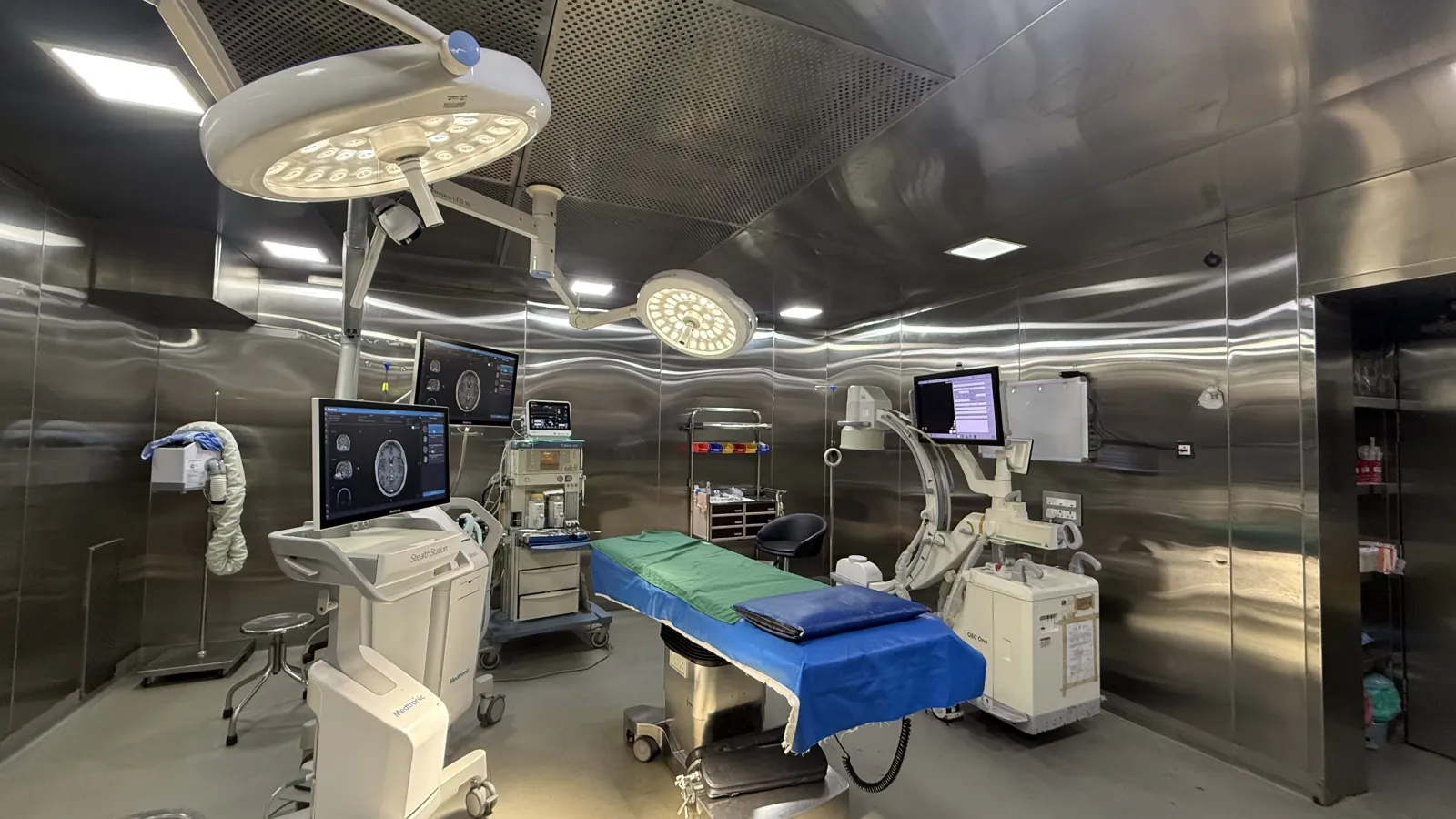
Advanced neurosurgery operating theatre in Mangalore
Surgical Speciality

Neurosurgery

Specialised management of neurological and spine conditions, backed by a dedicated post-operative ICU and Medtronic surgical navigation.

Medically reviewed by Dr. Deepak Suraparaju, MBBS, MS, DNB, FRCS, FEBNS · Last updated August 2026
Overview

Neurosurgery at Mangala Hospital

Mangala Hospital's Neurosurgery department provides comprehensive management of neurological and spine conditions, backed by a panel of experienced neuro-physicians and neurosurgeons and a dedicated post-operative ICU for the close monitoring these cases often need in the early recovery period.

The department is equipped with a dedicated neurosurgery operating microscope, motorised craniotomes and burrs, and micro-instruments for procedures as delicate as intracranial aneurysm clipping and tumour surgery. Endoscopic neurosurgery is available for select transsphenoidal pituitary procedures, and — shared with our ENT department — the Medtronic STEALTH S8 Neuro-ENT navigation system supports complex skull-base and transnasal surgery requiring millimetre-level precision.

Beyond cranial surgery, the team manages the full range of spine conditions, from simple discectomy to complex anterior reconstruction, and offers two technique-driven treatments for spinal disease: vertebroplasty, which stabilises osteoporotic spinal fractures with bone cement injected through a small needle, and laminoplasty, which relieves spinal cord compression while preserving spinal mobility. Head injury and trauma are managed round the clock in coordination with Casualty and Critical Care.

Conditions We Treat

Head Injury & Traumatic Brain Injury Chronic Subdural Haematoma Brain Tumours Intracranial Aneurysms Slip Disc (Disc Prolapse) Spinal Cord Compression Osteoporotic Spinal (Vertebral) Fractures Pituitary Tumours Spinal Trauma Hydrocephalus

See the Infrastructure

Take a look inside our critical care facilities on the Facilities page.

View Critical Care →

Need Urgent Care?

Our Casualty & Emergency department is open 24x7, with mobile ICU ambulance backup.

Call: 0824 244 3088

Why Choose Mangala Hospital

Precision Technology for Brain & Spine Care

Dedicated Neurosurgery Microscope

Purpose-built optics for cranial and spine procedures requiring maximum precision.

Motorised Craniotomes & Micro-Instruments

Purpose-built tools for intracranial aneurysm clipping and tumour surgery.

Medtronic STEALTH S8 Navigation

Shared with ENT, this system guides complex skull-base and pituitary surgery with real-time precision.

Vertebroplasty for Spinal Fractures

Immediate pain relief and restored vertebral height for osteoporotic fractures, via a minimally invasive needle technique.

Laminoplasty for Cord Compression

Relieves multi-level spinal cord compression in about an hour of surgery, with minimal blood loss and no collar needed beyond two weeks.

Dedicated Post-Operative ICU

Round-the-clock monitoring for patients recovering from cranial and spine surgery.

Procedures & Technology

From Cranial Surgery to Minimally Invasive Spine Technique

Cranial Surgery

Cranial & Trauma Neurosurgery

Burr-hole surgery, craniotomy and tumour removal are performed for head injury, intracranial bleeding and brain tumours. A dedicated neurosurgery microscope, motorised craniotomes and fine micro-instruments support controlled work around delicate brain and vascular structures.

Spine Surgery

From Discectomy to Reconstruction

The team manages spinal conditions ranging from slipped discs requiring discectomy or microdiscectomy to complex anterior reconstruction. Imaging-led planning aims to relieve nerve or spinal-cord compression while preserving stability and limiting unnecessary tissue disruption.

Targeted Spine Procedures

Vertebroplasty & Laminoplasty

Vertebroplasty stabilises selected painful osteoporotic vertebral fractures through a small image-guided access route. Laminoplasty creates more room for a compressed cervical spinal cord while preserving movement, with the approach selected according to the level and extent of narrowing.

Image-Guided Neurosurgery

Endoscopic & Navigation-Guided Surgery

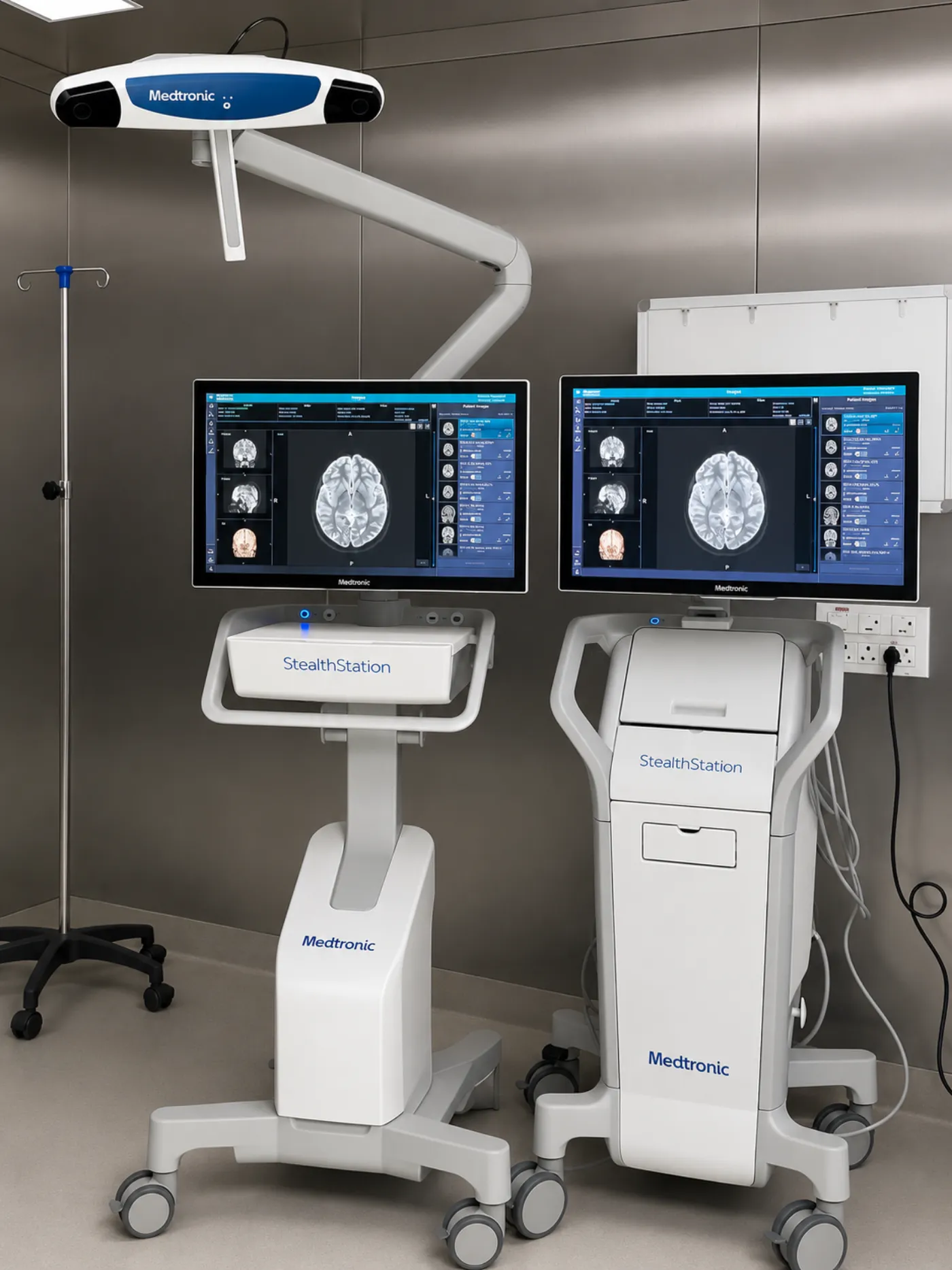
Select pituitary and skull-base conditions can be approached endoscopically through the nose. The Medtronic STEALTH S8 Neuro-ENT navigation system supports precise anatomical orientation during complex transnasal and skull-base procedures, with recovery backed by a dedicated post-operative ICU.

Medtronic STEALTH S8 Neuro-ENT navigation system used for image-guided neurosurgery at Mangala Hospital
STEALTH S8 Navigation
Millimetre-level surgical orientationPrecision for complex anatomyImage-guided planning and real-time navigation support selected skull-base, transnasal and complex neurosurgical procedures.
What to Expect

Your Care Journey, Step by Step

Consultation & Assessment

Clinical evaluation of your neurological symptoms and history.

Imaging & Diagnosis

CT or MRI imaging to precisely locate and characterise the problem.

Surgery or Management

Cranial or spine surgery, or medical management, planned around your specific diagnosis.

ICU Recovery & Rehabilitation

Close post-operative monitoring followed by coordinated rehabilitation and follow-up.

Patient Education

Frequently Asked Questions

What are warning signs of a serious head injury?+

Loss of consciousness, repeated vomiting, worsening headache, confusion, unequal pupil size, or seizures after a head injury are all warning signs that need immediate evaluation — please come to our Casualty department without delay.

When is surgery needed for a slipped (prolapsed) disc?+

Most disc problems improve with rest, medication and physiotherapy. Surgery is usually considered when there is significant nerve compression causing weakness, loss of bladder or bowel control, or pain that hasn't responded to conservative treatment over a reasonable period.

What is vertebroplasty and who needs it?+

Vertebroplasty is a minimally invasive treatment for painful spinal fractures, most often caused by osteoporosis, where bone cement is injected into the fractured vertebra to relieve pain and restore height — worth discussing if you have a painful osteoporotic spine fracture that hasn't settled with conservative care.

How long is the recovery after laminoplasty?+

Laminoplasty itself takes about an hour and involves minimal blood loss; most patients do not need to wear a neck collar for more than two weeks, with a comparatively swift return to daily activity.

Do all brain tumours require surgery?+

Not necessarily — treatment depends on the tumour's type, size, location and your overall health. Some are monitored, some treated with radiation or medication, and others require surgical removal; your neurosurgeon will explain the most appropriate option after imaging and assessment.

Do you accept insurance for neurosurgery?+

Yes, we accept cashless and reimbursement claims from all major mediclaim providers and TPAs. See our Insurance page for the full list, or check with our billing desk for your specific policy.

Book a consultation for neurosurgery today.

Mangala Diagnostics
📞 Call Emergency: 0824 244 3088📅 Book Appointment🩺 Health Checkup🔬 Mangala Diagnostics